
Essential Steps in a Basic Skincare Routine: What Are The Essential Steps In A Basic Skincare Routine
What are the essential steps in a basic skincare routine – Skincare is a crucial aspect of personal care that not only enhances your appearance but also contributes to overall skin health. Understanding the essential steps in a basic skincare routine can help you achieve a radiant complexion while addressing specific skin concerns effectively. Below, we break down the fundamental components of a skincare regimen, ensuring you have a comprehensive guide to follow.
Understanding Skin Types
Identifying your skin type is the foundation of a successful skincare routine. There are five main skin types: oily, dry, combination, sensitive, and normal. Each type has unique characteristics that influence product selection.
- Oily Skin: This type often appears shiny and may have enlarged pores. Products that control excess oil are crucial.
- Dry Skin: Characterized by flakiness and a tight feeling, dry skin needs rich, hydrating products.
- Combination Skin: A mix of oily and dry areas, this type requires a balanced approach.
- Sensitive Skin: Prone to redness and irritation, sensitive skin benefits from soothing, non-irritating products.
- Normal Skin: This type is typically balanced, requiring general care without specific products.
To determine your skin type at home, conduct a simple test: cleanse your face, wait for an hour, and observe the oiliness or dryness in different areas.
Importance of Cleansing, What are the essential steps in a basic skincare routine
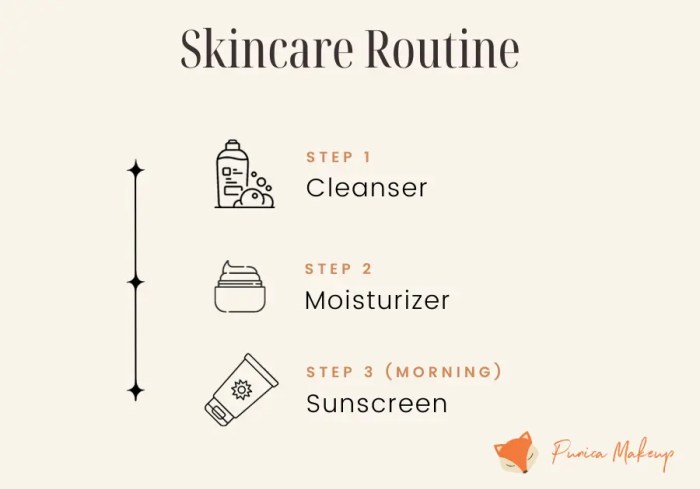
Cleansing is a vital step in any skincare routine, as it removes dirt, oil, and impurities from the skin’s surface. A proper cleansing routine prevents clogged pores and breakouts.
- Start with clean hands to avoid transferring bacteria to your face.
- Use lukewarm water to wet your face gently.
- Apply a suitable cleanser for your skin type, using circular motions.
- Rinse thoroughly with lukewarm water and pat dry with a clean towel.
Cleansers come in various forms: foaming, gel, cream, and micellar water. Each type caters to different skin needs, with foaming cleansers ideal for oily skin, while cream cleansers suit dry skin.
Exfoliation Techniques
Exfoliating the skin regularly helps remove dead skin cells, revealing a brighter complexion. It enhances the effectiveness of other skincare products by improving absorption.
- Physical Exfoliants: These include scrubs that manually slough off dead skin.
- Chemical Exfoliants: Products containing acids like AHA and BHA dissolve dead skin cells.
Exfoliation frequency depends on skin type: oily skin may benefit from exfoliating 2-3 times a week, while sensitive skin should do so once a week to avoid irritation.
Hydration Essentials
Moisturizing is crucial for maintaining skin hydration and barrier function. Different types of moisturizers cater to various skin types and concerns.
- Creams: Heavier and more hydrating, suitable for dry skin.
- Gels: Lightweight and refreshing, ideal for oily and combination skin.
- Lotions: A balance between cream and gel, useful for normal skin.
Choosing the right moisturizer involves assessing your skin type and needs to ensure optimal hydration.
Sun Protection Strategies
Daily sunscreen application is essential in protecting the skin from harmful UV rays, which can cause premature aging and skin cancer.
- Select a broad-spectrum sunscreen with at least SPF 30.
- Apply generously and reapply every two hours when outdoors.
There are two main types of sunscreens: chemical and physical. Chemical sunscreens absorb UV rays, while physical sunscreens reflect them. Both have their benefits, so choose based on your skin’s sensitivity and preference.
Additional Skincare Steps
Incorporating serums and treatments tailored to specific concerns can elevate your skincare routine. Common active ingredients include:
- Salicylic Acid: Effective against acne.
- Retinol: Promotes anti-aging.
- Vitamin C: Brightens skin and evens tone.
Additional steps like toners or face masks can be included based on individual skincare goals.
Creating a Personalized Routine
Crafting a personalized skincare regimen involves understanding your unique skin needs.
“Consistency and patience are key to achieving visible results in skincare.”
A sample routine could look like this:
- Morning: Cleanser, moisturizer, and sunscreen.
- Evening: Cleanser, toner, serum, and moisturizer.
Recognizing that results take time and staying consistent with your routine will lead to healthier skin over time.